Used CD Stores
Those prehistoric times

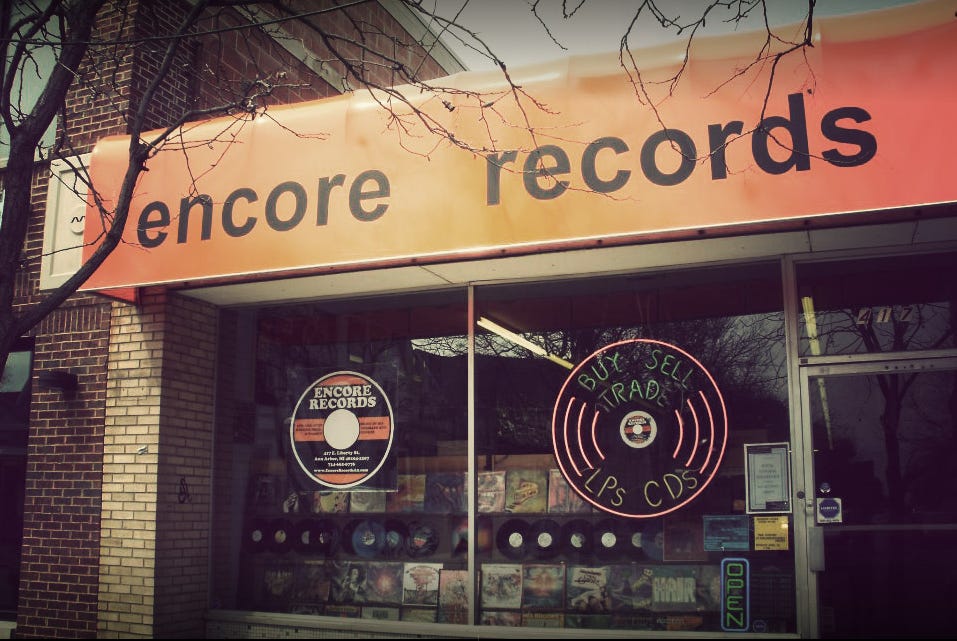
I miss used CD stores. That was my kind of crate digging: not in a moldy basement, shoulder to shoulder with DJs and hipsters, but going through racks of jewel cases to find some forgotten gold for a good price.
Those were the first brick & mortar stores to go under when streaming starting undercutting physical sales, and the business moved online. Now if you buy a used CD it’s most likely dead stock that’s been sitting in a wannabe entrepreneur’s garage for a decade. Instead of sifting through the shelves in a store, you have to know what you’re looking for, and it exists as a line in a spreadsheet, with a row and aisle number for the seller to find in their warehouse.
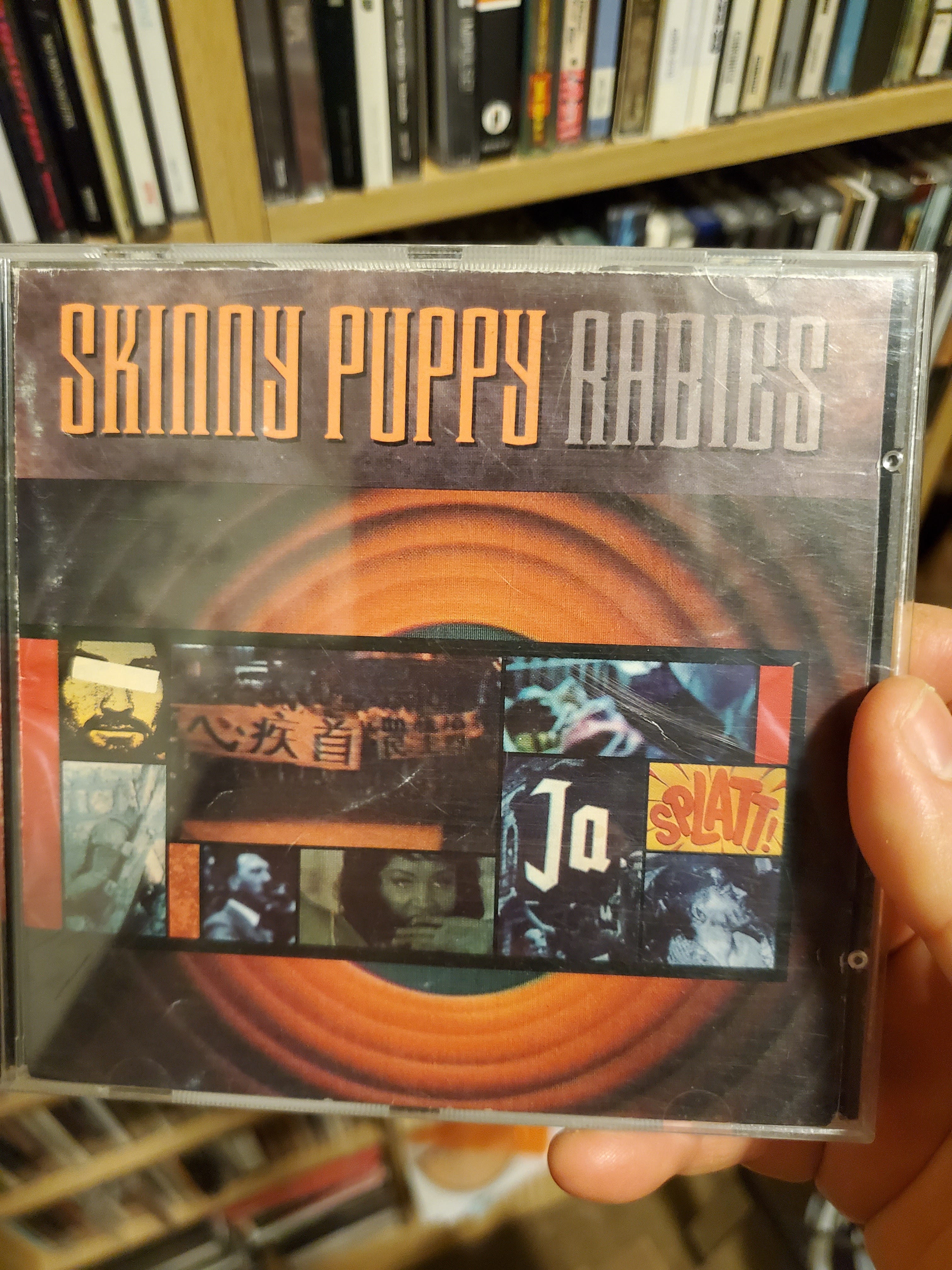
My earliest used CD memory is this copy of Rabies by Skinny Puppy, which I got for $1 in a bin of random albums at a record store by the Showcase Cross Pointe movie theater in Dayton. It’s missing the tray card so I didn’t know what songs were on it, but Skinny Puppy is a great band name, and Al Jorgensen produced it, and I liked Ministry, so why not? The album is the most guitar-centric outlier in their catalog, and the tracks are a bit too spotty to hold together as an album, but for a dollar I was ready to give it a chance.
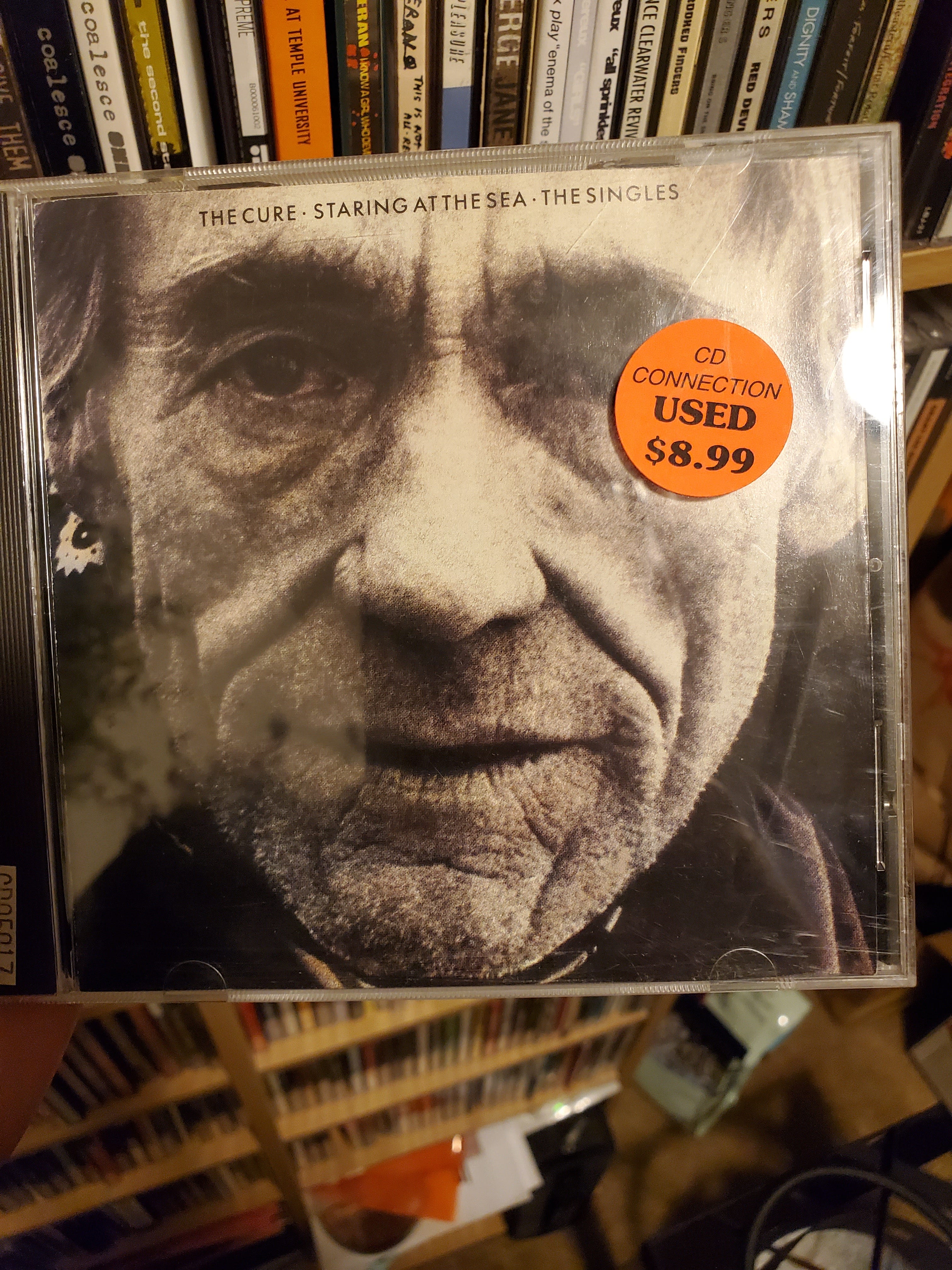
CD Connection is where I got The Cure’s Staring at the Sea for $8.99, a classic singles compilation that flows like an album. If you bought the cassette version, you got 4 fewer songs but it was titled Standing on a Beach, all the better reason for Cure completists to get it. Complicating matters further was the US version switched out some tracks from the UK version, and some of the songs mixes were unique to the comp. The Cure were a band that could exist simultaneously as an album band and singles band, so you were still getting a good idea of what they could do even if you didn’t buy the full lengths. That all kind of ended in the mid-90s after some half-hearted albums, so they’ve been grinding out on the festival circuit ever since, to huge appreciative audiences. It’s a living!
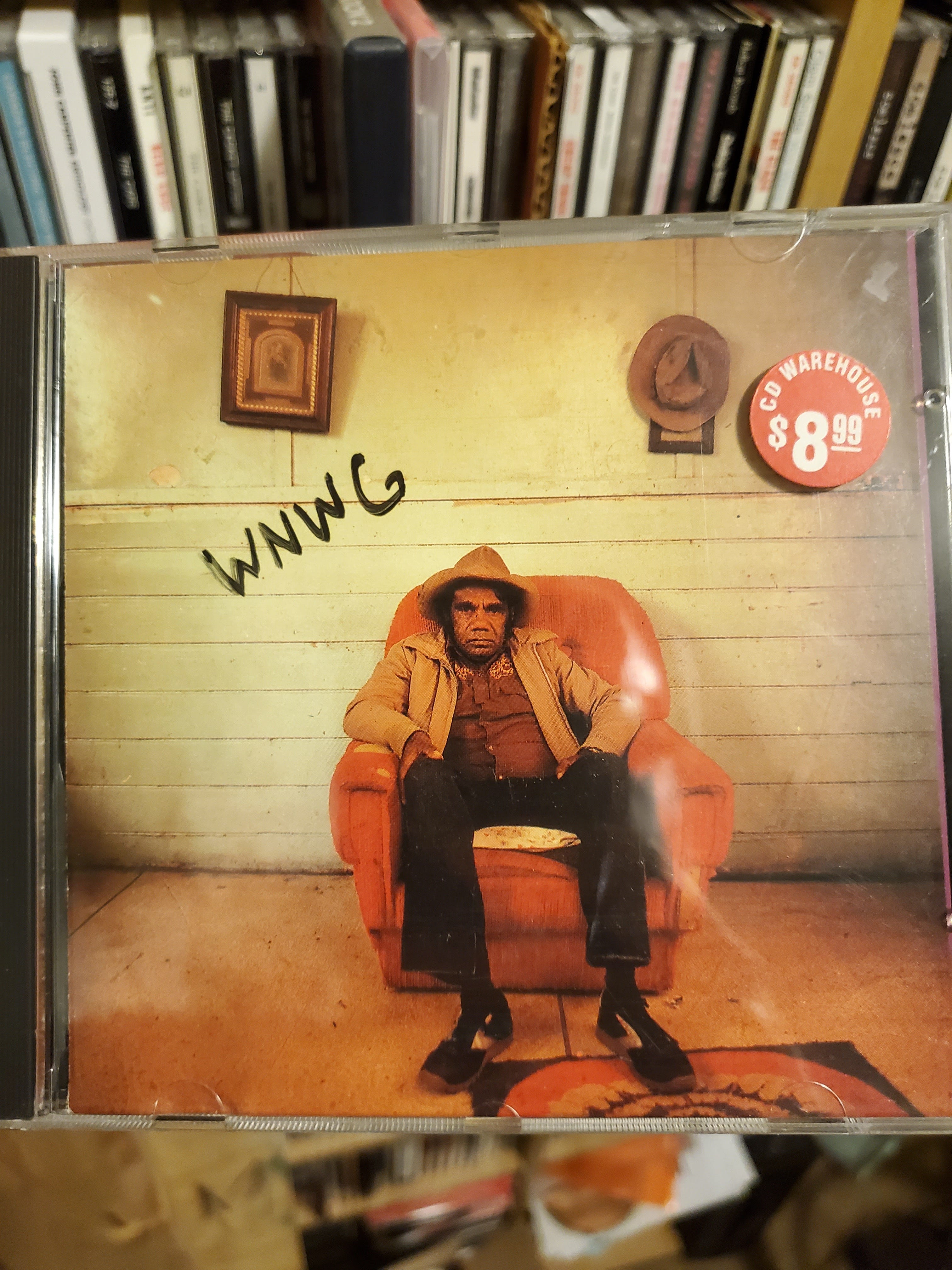
I bought Buffalo Tom’s Let Me Come Over from CD Warehouse in high school for $8.99. This album is foundational to indie rock. There’s no bad songs. Buffalo Tom’s career was the punk-to-indie-rock timeline played out in real time, from their noisy beginnings on SST to their brief major label success. They had a very brief window of popularity, between this album in 1992 and ending with “Sodajerk” from their next album being on the My So-Called Life soundtrack. The band had been around since 1988 and already had a phase of sounding like Dinosaur Jr (going so far as to have J Mascis produce an album), and had deeper connections to their native Boston indie rock scene than the grunge wave that they got swept up. The thing is, they were so strongly identified with that brief window between Nevermind and Kurt Cobain’s death that they are inextricably linked to the early 90s in my head. By the time the keyboard-heavy Smitten came out, the band had lost corporate support and the world moved on to nu metal, so they hung it up til 2007. But for a while, early 90s pop culture totems like The State, My So-Called Life, that brief spate of Pulp Fiction knockoffs, and Grunge Fashion pictorials, Buffalo Tom seemed tied up in all of that. Finally, if none of that rings any bells, maybe you remember their name on the 1993 Rolling Stone cover with a nude Janet Jackson. Oh that kickstart your memory? Figured it would.
In college, used CDs were crucial for filling gaps in my collection at a decent price. By then I had access to high speed internet, but P2P sharing was the wild west, with low bitrates and notoriously mislabeled MP3s. This was also before you could transfer a Zip file, so you had to download individual songs and assemble the album yourself.
My college town had two record stores, a small indie with a small but affordable selection of new albums, and Finders, a chain store that was still shilling CDs for $15.99 a pop. The upside was they had a giant used CD section, by giant I mean it was shelves 10 feet high, so they provided a step stool to get to the upper levels. That’s where I got Happy Mondays Pills 'N' Thrills And Bellyaches for $5.99.
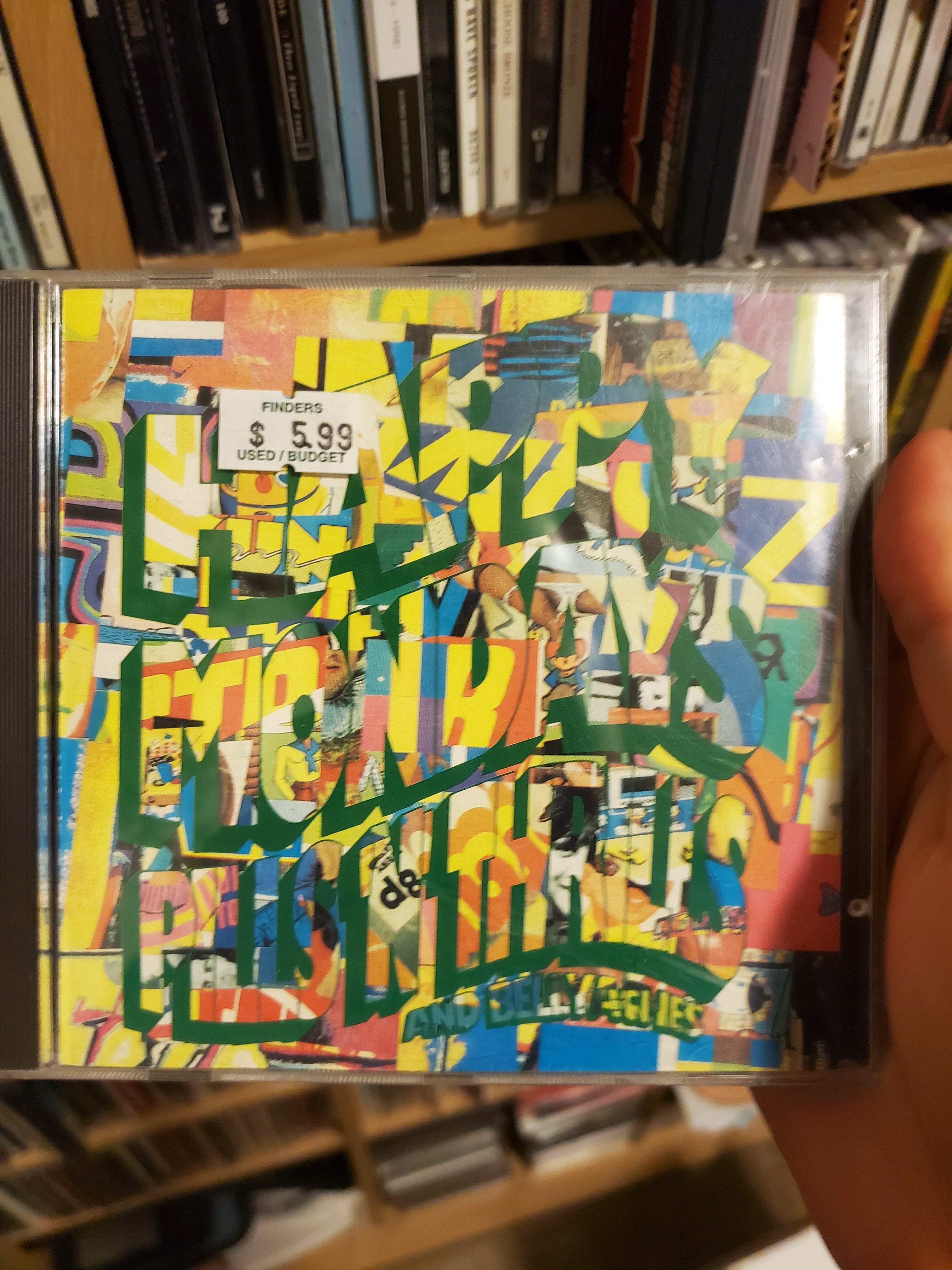
Happy Mondays were on Factory Records, and spoken in the same revered tone as Joy Division and New Order, so I kind of assumed they’d be the same dour post-punk. That was incorrect. Happy Mondays were a dance band, they tried their best to get the floor moving, and while Shaun Ryder’s lyrics could be incredibly sad, he never sounded like he was having less than the best time ever. Commercially this was the band’s high point in the UK, following the success of acid house in the home country. I was unaware, until reading the liner notes, that Paul Oakenfold co-produced this album. He’s about as household a name as you can think of when it comes to DJs, and at the time he was a bit of an underground superstar, just in the rave world. A few years later he’d do a bunch of high-profile remixes and become an industry unto himself.
I want to be honest: I did not feel this album at first. Maybe “God’s Cop” but that’s it. I wasn’t old enough to really appreciate it, so I’m glad I hung onto it. Sometimes you’re too young and dumb to connect with music that’s not just trying to make you feel sad.
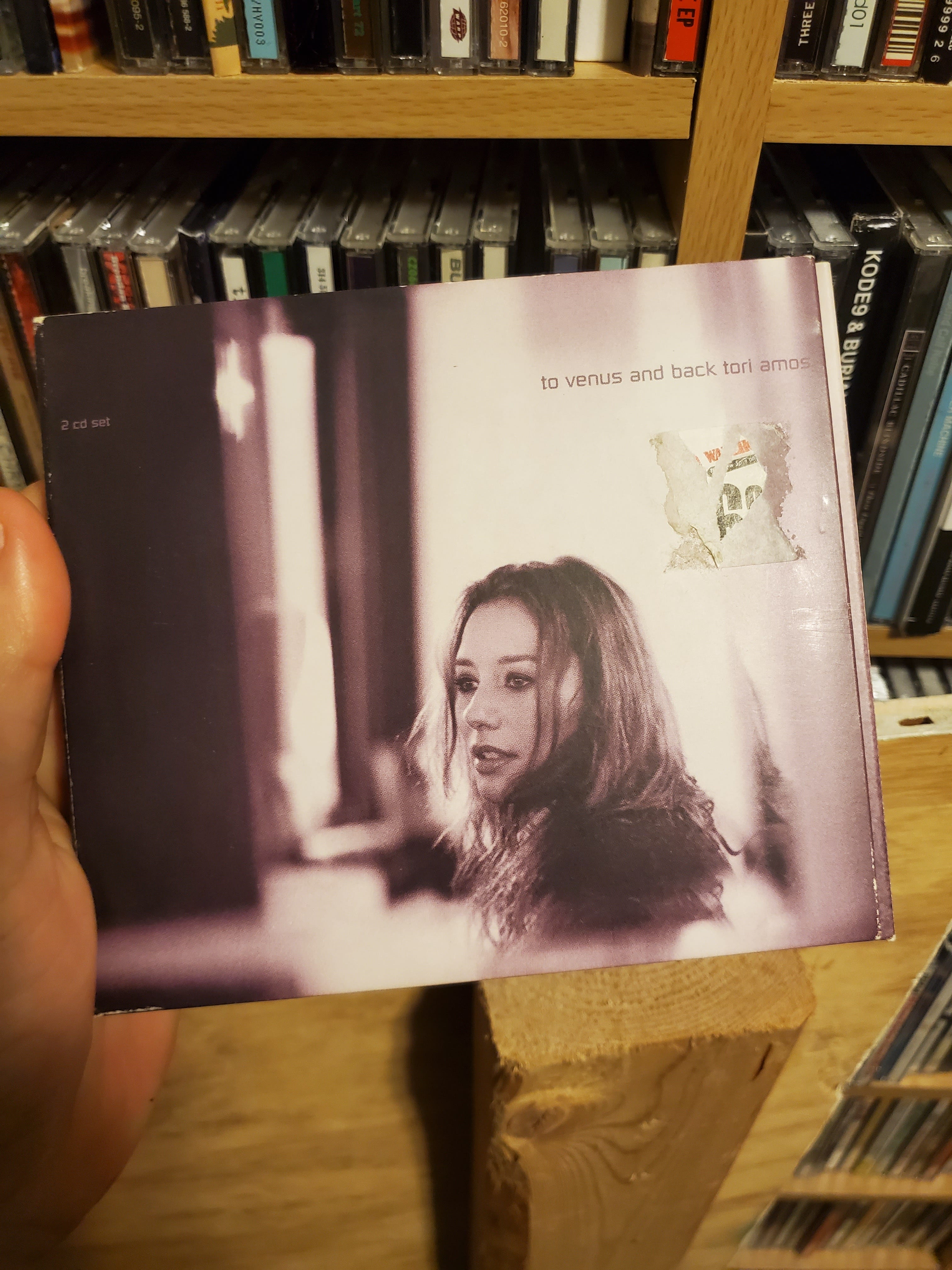
Used CD stores were also good for buying albums that only had 1 song you knew was good, to avoid overpaying in the era of $15.99 compact discs. My example is Tori Amos’ half live/half studio To Venus & Back, which I bought for 1,000 Oceans and nothing else. This copy was found in Findlay, Ohio and either the price sticker was already peeled off or maybe I did that. Either way I recall nothing about the rest of the album and it’s 2 fucking discs long.
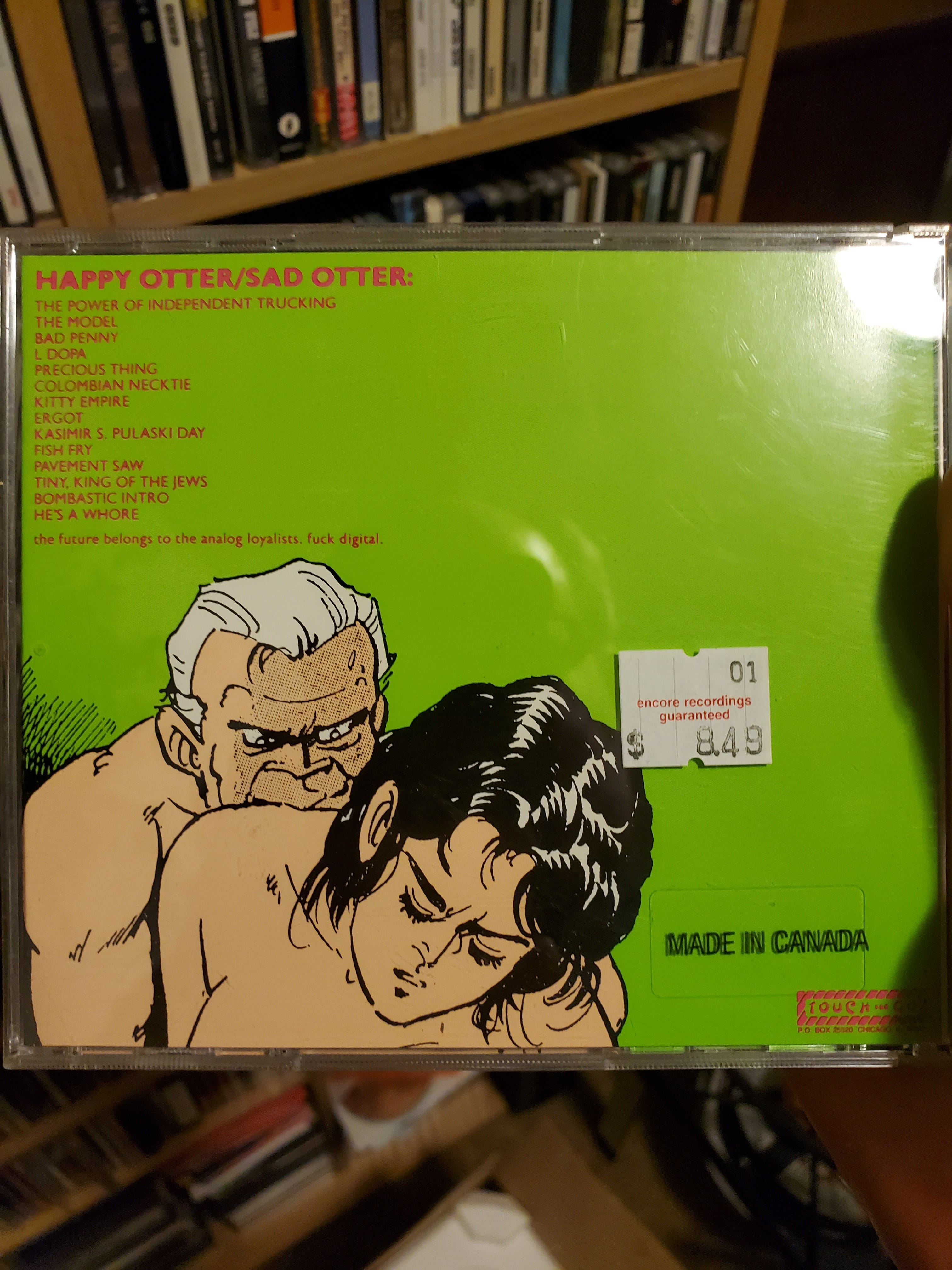
Big Black Songs About Fucking is probably the most recent used CD I bought in a brick-and-mortar store, Encore Records in Ann Arbor, Michigan. The clerk was Fred Thomas, a great musician who’s been at it for decades and gets better with age. When I handed him the empty jewel case he goes “happy otter sad otter, ha!” and I am still not 100% sure what the joke was. I’m told it’s a reference to flaccid and erect penis, but at the time I just laughed along like I knew what he was talking about.
I bought that album in maybe 2004, since then I’ve just been using Discogs or Amazon marketplace to buy used CDs. Since streaming destroyed physical stores, the selection is actually better, and the prices cheaper, but it’s not the same. Flipping through racks of CDs and finding a hidden jewel makes for a better surprise, and bigger dopamine rush (if we’re being real) than clicking through web pages.